Before
Set up
Node goes in the rack on site. Operators sign in to REMI and see every node their tenant owns, then assign each one a task.
Node · Producer · Delivery
Hardware on site, control in the browser, the edit already running. Click through the chain — each step updates the detail panel below. Salvo REMI sits above the chain rather than in it.
Selected step
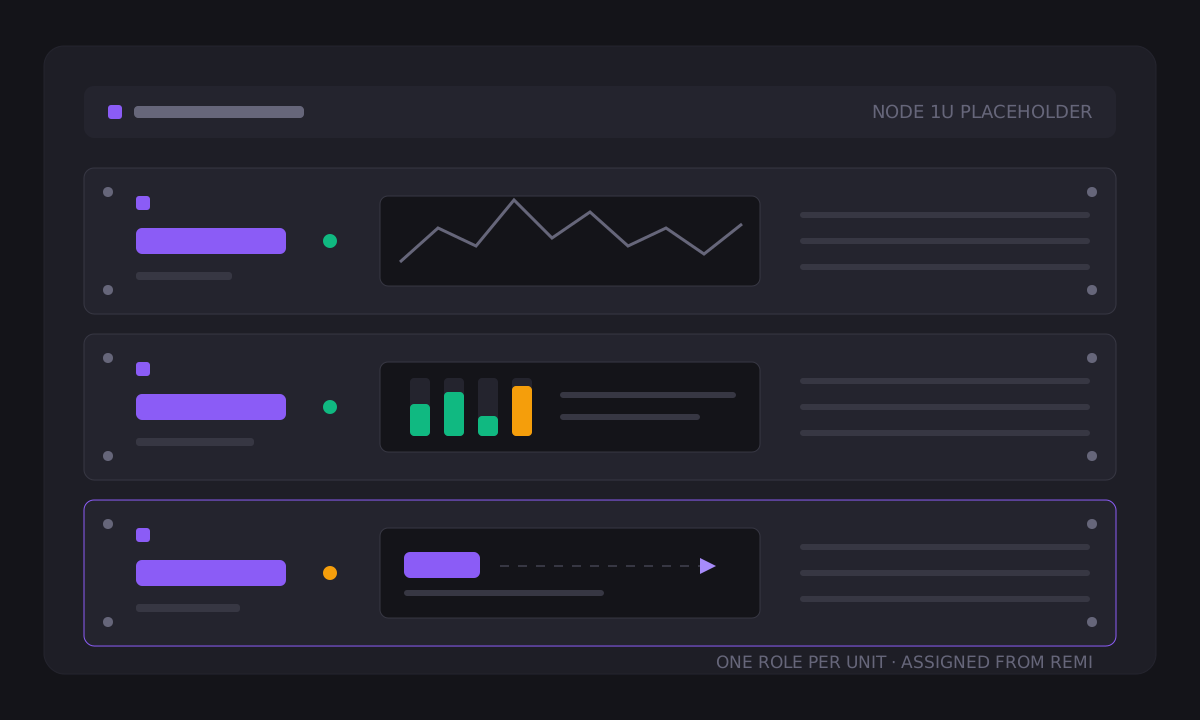
Node is one piece of hardware that takes one role at a time: scope, encoder, audio monitor, or switcher control. Rack as many as the show needs and assign each one from Salvo REMI.
Open Node →One production, start to finish
Before
Node goes in the rack on site. Operators sign in to REMI and see every node their tenant owns, then assign each one a task.
Live
REMI drives the on-site switcher, cameras, scopes, and audio from the browser. Node moves every frame off site while the show runs.
Minutes later
Producer already has the material. The team cuts and delivers without waiting for a file to travel or a card to come back.
The point is operational sync between remote control, capture, and output. Teams can see when a source hits the chain, and visible delay stays explicit instead of hidden.
Salvo is software on hardware we build and operate ourselves: Node in your rack, Producer's editing hardware where the team works, and managed services on owned servers across two sustainable datacenters in Amsterdam and Warsaw. For now, managed hosting is EU-only and aligned with GDPR data-handling guidelines.
Need a deployment fit-check? We can map your current hardware estate to an Salvo rollout plan during a demo session.
Three products sold under one name only counts for something if they behave like one system. These are the properties we hold them to.
Node's transport to Producer delivers every frame, not best-effort. Where delay exists, it stays visible in the operator surface rather than absorbed silently.
What you see is what you get. The preview renderer and the export pipeline use the same source of truth. Frame for frame.
Multiple people can work across the system simultaneously, across multiple sites, without stepping on each other.
On-premise hardware, cloud infrastructure, or a hybrid of both. The system adapts to your environment, not the other way around.
We ship what works. We don't add features to fill a comparison chart.
Producer is in closed beta and open to new clients now. Node lands Q4 2026, REMI Q1 2027. Tell us how you work and we'll map a rollout plan against those dates.
Demo workflow and qualification form are placeholders and can be replaced with your CRM flow.